If you're a civil contractor sizing up your next excavator, the brand debate is real. Dealer relationships, parts availability, residual value, hours-per-tonne durability — every operator has a view and most views are correct in their own context. What gets less air time is how credit teams actually read those four major brands when an excavator file lands on their desk.
That's the lens here. Not which brand is best — operators sort that out themselves — but how the lender side reads each one when sizing up an application. It matters because the brand on the invoice changes the file shape, sometimes meaningfully, and that influences whether the file is straightforward, conditional, or harder than it should be. As always, no specific lenders are named — the categories (captive manufacturer-aligned finance, broker-market non-banks, tier 1 banks) are how the file shape varies, and that's the lens.
The four majors at a glance
- Komatsu — Japanese, strong national dealer network, broad range from 1.7-tonne minis to 90-tonne-plus. Reputation for reliability, particularly in the 8–30 tonne working range.
- Caterpillar (CAT) — American, market-leader presence, dominant in larger and mining-grade machines. Premium positioning and historically very strong residual value.
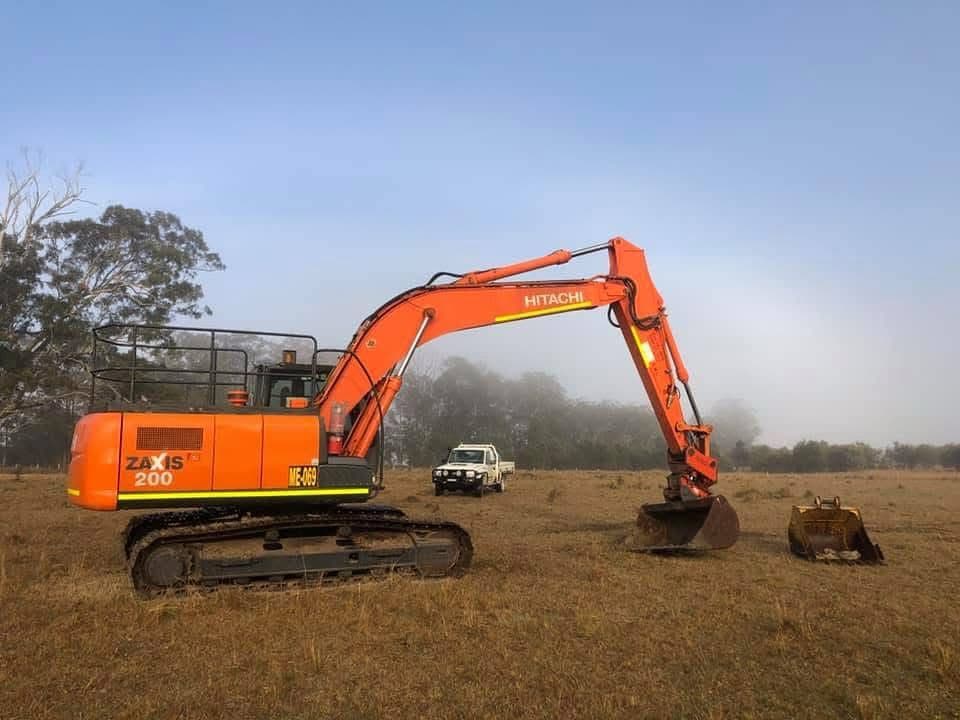
- Hitachi — Japanese, especially strong in the 5–50 tonne range. Hydraulic-engineering reputation, steady dealer network.
- Kobelco — Japanese, often the "operator's brand": quiet cabs, strong fuel efficiency, popular on confined or noise-sensitive sites. Slightly lighter market share than the other three.
All four are eligible primary assets on most credit teams' books. The question isn't whether they'll finance the brand — it's how the file shape varies between them.
What credit teams look at on any excavator file
Before brand, the basics. Credit teams read four things: the asset specifics (make, model, year, hours, condition, value versus price, age at end of term); the source (dealer is most straightforward, private sale needs more work); the operator and business; and the deal context. Brand mostly influences the first one — asset specifics. The other three are about you and the deal. The four numbers every lender asks covers the operator side in detail.
Brand affects four specific dimensions of the asset read: residual value curve over the term, the lender age ceiling, parts and service network depth, and captive versus broker-market availability. Here are the four brands through those lenses.
Komatsu
Residual value is strong and holds well across most size brackets, and dealer demand is consistent — machines find buyers on the secondary market, which gives lenders confidence. Age ceilings are generally generous; most categories will write a 10-year-old machine at end of term, with condition and hours mattering more than calendar age. Parts and service are very deep nationally. On captive versus broker-market, Komatsu runs its own finance arm and dealers default to it at point of sale; the broker-market view is that captive is often competitive on new prime files while broker-market non-banks compete or win on used, lo-doc, and policy-edge files. The value-add on a new purchase is running the captive quote against the panel. File shape: clean — the most straightforward of the four.
Caterpillar (CAT)
Residual value is historically the strongest of the four, and credit teams price that in — sometimes accepting marginally tighter LVRs because the asset value is more defensible. Age ceilings are generous, often slightly more on the largest machines where CAT is most dominant. Parts and service are deep nationally. Captive versus broker-market: CAT also runs a well-established captive arm, often the default on new larger machines, while broker-market non-banks compete strongly on used and multi-asset deals. File shape: clean to favourable — the residual reputation sometimes earns a slightly better look on the same numbers.
Hitachi
Residual value is strong, particularly in the 5–50 tonne range, supported by the hydraulic-engineering reputation and a healthy secondary market for well-maintained machines. Age ceilings are comparable to Komatsu and CAT for the same class. Parts and service are good, though slightly less deep than Komatsu and CAT in some regional centres — credit teams read this only marginally. Captive versus broker-market: captive finance exists but is less aggressively positioned in the broker conversation, so the broker-market non-bank category is often the natural home, especially for used and lo-doc files. File shape: clean.
Kobelco
Residual value is good but a small step behind the other three in pure resale terms, with lighter market share meaning thinner secondary demand in some regions — credit teams read this through slightly tighter LVR ceilings on used files. Age ceilings are comparable on newer machines; older used examples sometimes attract more conservative treatment. Parts and service cover most major regions, though dealer count is lower — worth a conversation about parts lead time for remote operators. Captive versus broker-market: the captive presence is lighter, so broker-market non-banks are typically the primary home. File shape: mostly clean, with marginal tightness on used and tight-LVR scenarios.
Newer and emerging brands
Some of the newer Chinese brands can be perfectly good, reliable machines on site. The difference is history: there's less long-term resale data and fewer cycles of lending against them, so lenders price accordingly. That can mean slightly tighter LVRs, shorter maximum terms, and in some cases an expectation that you'll be looking at a newer machine by end of term rather than stretching one unit out forever.
What this means for your file in practice
- New machines through an authorised dealer: all four finance similarly clean. The real question is captive versus broker-market — get both quotes and compare on rate, terms and flexibility.
- Used, dealer purchase: all four viable, with minor LVR tightening on Kobelco in some scenarios.
- Used, private sale: the file gets more work regardless of brand — inspection, valuation, payout coordination and PPSR mechanics matter more than the badge. The yellow plant private sale paperwork piece runs the list, and broker-market non-banks are typically the category for these files.
- Larger machines (40-tonne-plus): CAT and Komatsu dominate, and the lender category often steps up into tier 1 commercial asset finance arms for established contractors — useful context when you're scaling a fleet.
- Attachments: financed with the parent machine they're routine across all four brands; stand-alone they're a tighter conversation.
The practical difference between brands is smaller than the difference between lender categories. Getting the file onto the right type of desk — captive for some new deals, broker-market non-banks for used or harder ones, tier 1 banks for established fleets — is where most of the outcome is set.
The hard-deals overlay
Where it gets interesting is when friction points stack: a private-sale used machine, a new-ish ABN or a sole-trader-to-fleet step, a tight settlement window, or past credit hits. Any one is workable across all four brands. Stacked together, the file moves out of the clean zone into hard-deals territory where panel breadth matters. The brand barely changes that — what changes is which category the file fits and how to structure the application. If you've been knocked back on a previous excavator application, brand is rarely the issue; eight times out of ten it's LVR tightness, conduct on a previous file, or a business-trajectory question — the same three killers the prime mover refi piece walks through.
What to send when you enquire
For any excavator file: asset specifics (make, model, year, hours, serial, condition, photos if you have them); the source (dealer or seller details); the price; deposit or trade-in; business details (ABN, trading history, a sense of turnover); the timeline; and a one-line "why now". If any hard-deals overlay applies, flag it at the front so the shortlist can be matched the first time. See the machinery finance page for the wider picture — or, if you're buying on the Sunshine Coast, the local read — then send the asset details and we'll come back with a shortlist and an indicative repayment the same day during business hours.