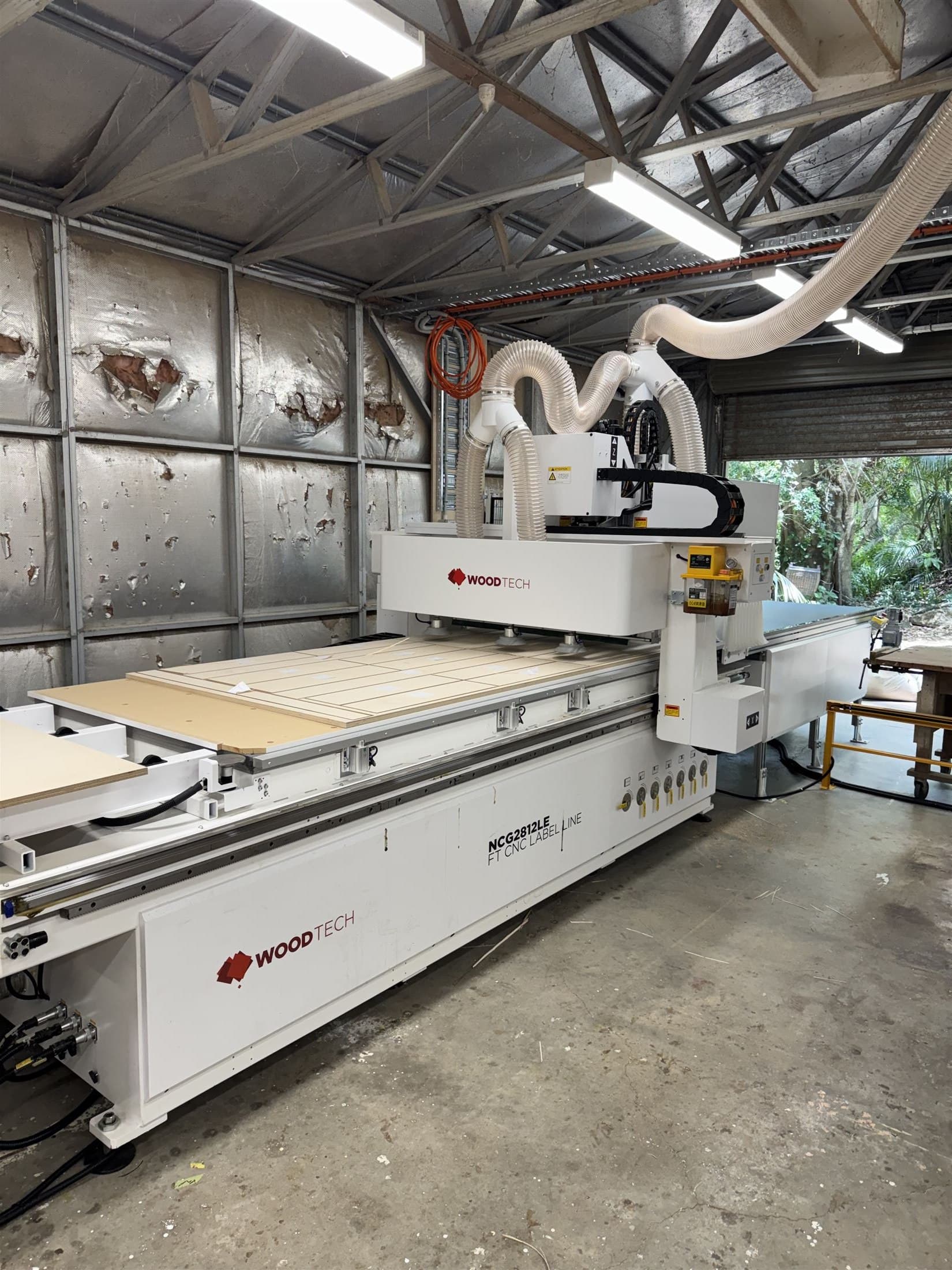
Moving out of the home garage and into a proper workshop is a real step up, and the fit-out is usually the part that surprises people. It isn't one purchase — it's a stack of them. Benches, racking, a hoist or two, compressed air, dust extraction, the CNC, the wiring to run all of it, sometimes a mezzanine and an office. The same pattern holds for a café kitchen or a retail shopfit: a lot of separate assets that together make the space work. The question is rarely whether to finance it. It's which structure to finance it under, because the three common options land very differently on tax and on the balance sheet.
This piece walks through the three structures most fit-out finance deals use — chattel mortgage, commercial lease, and operating lease — in plain terms. One caveat that matters: the desk structures the finance, it doesn't do your tax. The way this lands on your tax and GST is your accountant's job — our job is to make sure the options on the table actually match what they're trying to do for you. What follows is the lay of the land so that conversation is a faster one.
Chattel mortgage — you own it, the lender holds security
Under a chattel mortgage you own the fit-out assets from day one. The lender advances the funds, you buy the gear, and the lender takes a registered security interest over it until the loan is paid out. It's the workhorse structure for trade and workshop fit-outs because it's clean and it's familiar.
Because you own the assets, they sit on your balance sheet, and the depreciation and interest treatment follow ownership. For a business registered for GST on an accruals basis, the GST on the purchase is generally claimable up front rather than spread across the term — which is one of the reasons chattel mortgage is so common for businesses that want the input tax credit sooner. The repayments are principal-and-interest, you can usually set a balloon at the end to lower the monthly cost, and at the end of the term you own the gear outright with no further steps. The trade-off is that you're carrying the assets and the debt on your books, which matters if you're watching your balance sheet for other reasons.
Commercial lease — the lender owns it, you have the use of it
A commercial lease (often called a finance lease) flips the ownership question during the term. The lender buys the assets and leases them to you; you have full use of the fit-out and you make regular lease payments. At the end of the term there's typically a residual to deal with — you can pay it out and take ownership, refinance it, or in some cases hand the assets back.
The appeal here is usually about how the payments are treated and how the arrangement sits relative to ownership. Lease payments have a different character to chattel mortgage repayments, and the GST treatment differs too — it tends to apply to the payments rather than being claimable on the full purchase up front. For some businesses that smooths the cash position; for others it's less attractive than claiming the credit early. This is squarely an accountant question, because the right answer depends on your GST basis, your tax position and what you're trying to achieve. The mechanical point is simply that the lender holds title until the residual is dealt with.
Operating lease — closest thing to renting the fit-out
An operating lease sits furthest from ownership. The lender retains the asset and the residual risk, and you pay for the use of the equipment over a defined term — much closer to a rental than a purchase. At the end you generally hand the gear back, with no obligation to buy it. The payments are typically treated as an operating expense rather than as the financing of an asset you own.
This structure suits fit-out elements with a defined useful life or a real chance of being upgraded — technology-heavy kit, certain hospitality equipment, anything you'd genuinely rather refresh than own through to the end of its days. It keeps the asset off your balance sheet and the payments predictable. The cost is that you don't build any equity in the gear, and over a long enough horizon paying to use something can total more than owning it would have. Operating leases are more of a specialist product — broker-market non-banks are the typical home for the bulk of fit-out finance, while operating-lease structures more often come from specialist non-bank providers who are set up to carry the residual risk.
How to actually choose between them
If you strip the jargon out, choosing a structure comes down to three questions: do you want to own it at the end, how much flexibility do you want if the job changes, and how much does your accountant care about where it sits on the balance sheet?
The structure decision usually comes down to three things: whether you want to own the gear at the end, how you want the GST and deductions to fall, and whether you care about keeping the assets off your balance sheet. A trade business buying durable workshop equipment it intends to keep for a decade leans naturally toward a chattel mortgage. A hospitality fit-out with kit that'll be tired in five years might look harder at a lease. A retailer who values a clean balance sheet for other borrowing reasons might weigh an operating lease for part of the fit-out and own the rest outright.
If you're a fabrication shop putting in hoists, benches and a compressor you'll keep for ten years, a chattel mortgage usually makes sense — you own it, you claim the GST up front, and you just get on with it. If half your spend is on tech that'll be tired in four or five years, that slice may be better on a lease so you're not stuck with outdated gear on the books.
In practice, most decent-sized fit-outs end up split: long-life stuff on a chattel mortgage, upgrade-prone gear on a lease. The work is in deciding where to draw that line for your shop, based on your cashflow and what your accountant wants to see. That's the conversation worth having with you and your accountant upfront, before you sign anything. There's no single right answer, and the lender's appetite for the deal will also shape what's available — which is where understanding the four numbers every lender asks for earns its keep, because the structure has to be one a lender will actually write for your business at its current stage.
Getting the file in front of the right desk
A fit-out file looks a little different to a single-asset purchase. There are multiple suppliers, often staged delivery and installation, and sometimes a mix of new and second-hand gear. A lender wants to see the whole picture — the total cost, what makes it up, and how the business will service it — rather than a one-line invoice. Getting that presented cleanly is most of the battle, and it's worth a read of how the desk works a deal to see how a multi-supplier file gets shaped before it goes anywhere near an underwriter.
Because the desk lives in hard, multi-supplier files every day, the call on which lenders are happy with staged invoices, second-hand gear, and a bit of complexity — and which ones only want a single clean tax invoice from a big-name supplier — gets made up front, not after a knock-back.
The order of operations matters too. Talk to your accountant about the tax and balance-sheet side, because that's their call, not ours. Then bring the desk the scope of the fit-out and what you're trying to achieve, and we'll match the structure — or the mix of structures — to a lender with the appetite to write it. If you've got a fit-out scoped or even half-scoped, start a quote and we'll work out the cleanest way to fund it.